

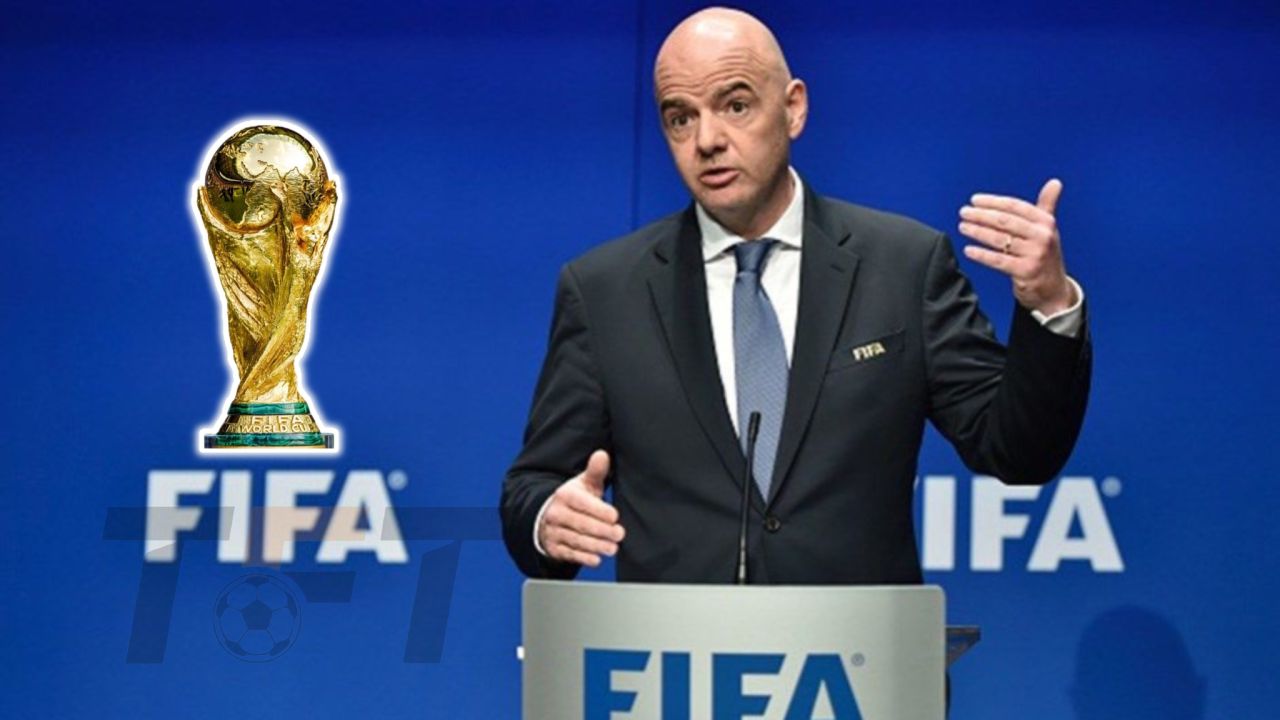
The 2026 FIFA World Cup in the United States, Canada, and Mexico is set to be the largest in history, but it’s the radical new rule changes that have the football world talking. In a move to "protect the beauty of the game," FIFA and the International Football Association Board (IFAB) have officially approved a series of game-changing regulations designed to kill time-wasting and expand the powers of VAR.
These updates, confirmed at IFAB's 140th Annual General Meeting in Wales, will fundamentally alter how the game is played and officiated. Here is everything you need to know about the new laws of the game.
In perhaps the most aggressive move against time-wasting, referees will now enforce a 5-second countdown for throw-ins and goal kicks.
Throw-ins: If a player fails to return the ball to play within 5 seconds of being ready, possession is immediately awarded to the opposing team.
Goal Kicks: If a goalkeeper exceeds the 5-second limit, the referee will award a corner kick to the opposition.
This builds on the recently tested goalkeeper "6-second rule," ensuring the ball stays in play longer and the tempo remains high.
Gone are the days of players slowly walking across the pitch to waste minutes. Under the new rules, a substituted player has exactly 10 seconds to leave the field once the board is raised.
The Penalty: If the player fails to exit within the 10-second window, the incoming substitute must wait one full minute of active play on the sideline before they are allowed to enter, leaving their team temporarily down to 10 men.
The Video Assistant Referee (VAR) system is getting its biggest upgrade since its inception. For the 2026 World Cup, VAR officials can now intervene in two critical areas previously off-limits.
Second Yellow Cards: VAR can now review and overturn "clearly incorrect" second yellow cards that lead to a red card.
Corner Kicks: If a corner is wrongly awarded (or missed), VAR can immediately alert the referee to correct the decision, provided it doesn't delay the restart.
To prevent players from "faking" injuries to disrupt an opponent's momentum, any player who receives medical assessment or treatment on the pitch must remain off the field for at least one minute after play restarts. This ensures that only genuine injuries stop the clock.
In a bid to reward attacking football, IFAB has clarified Law 12. If a referee plays advantage following a foul that would typically warrant a yellow card (like stopping a promising attack), and a goal is subsequently scored, the offending player will not receive a caution. Since the goal was scored, the "impact" of the foul is considered nullified.
•5-second countdown on goal-kicks and throw-ins
•10-second countdown on substituted player to leave the pitch
•VAR can check corner kicks and second yellow cards
•Players treated for an injury outside the pitch must stay off for at least one minute.
Why the Change?
FIFA President Gianni Infantino and refereeing legend Pierluigi Collina have been vocal about increasing "effective playing time." With the World Cup expanding to 48 teams and 104 matches, these rules aim to ensure fans get the high-octane spectacle they pay for, free from the tactical "dark arts" of time-wasting.
The new Laws of the Game officially come into force on July 1, 2026, but will be fast-tracked for the World Cup's opening match on June 11.
Related News:
> Cristiano Ronaldo Injury Alarm: Will Portugal Captain Miss the World Cup 2026?
> Thomas Müller: Why Argentina Remains the 2026 World Cup Favorite And the “Messi Factor” Uncertainty!













Saturday, 14 March 2026
Publish Date : 14 March 2026
The 2026 FIFA World Cup in the United States, Canada, and Mexico is set to be the largest in history, but it’s the radical new rule changes that have the football world talking. In a move to "protect the beauty of the game," FIFA and the International Football Association Board (IFAB) have officially approved a series of game-changing regulations designed to kill time-wasting and expand the powers of VAR.
These updates, confirmed at IFAB's 140th Annual General Meeting in Wales, will fundamentally alter how the game is played and officiated. Here is everything you need to know about the new laws of the game.
In perhaps the most aggressive move against time-wasting, referees will now enforce a 5-second countdown for throw-ins and goal kicks.
Throw-ins: If a player fails to return the ball to play within 5 seconds of being ready, possession is immediately awarded to the opposing team.
Goal Kicks: If a goalkeeper exceeds the 5-second limit, the referee will award a corner kick to the opposition.
This builds on the recently tested goalkeeper "6-second rule," ensuring the ball stays in play longer and the tempo remains high.
Gone are the days of players slowly walking across the pitch to waste minutes. Under the new rules, a substituted player has exactly 10 seconds to leave the field once the board is raised.
The Penalty: If the player fails to exit within the 10-second window, the incoming substitute must wait one full minute of active play on the sideline before they are allowed to enter, leaving their team temporarily down to 10 men.
The Video Assistant Referee (VAR) system is getting its biggest upgrade since its inception. For the 2026 World Cup, VAR officials can now intervene in two critical areas previously off-limits.
Second Yellow Cards: VAR can now review and overturn "clearly incorrect" second yellow cards that lead to a red card.
Corner Kicks: If a corner is wrongly awarded (or missed), VAR can immediately alert the referee to correct the decision, provided it doesn't delay the restart.
To prevent players from "faking" injuries to disrupt an opponent's momentum, any player who receives medical assessment or treatment on the pitch must remain off the field for at least one minute after play restarts. This ensures that only genuine injuries stop the clock.
In a bid to reward attacking football, IFAB has clarified Law 12. If a referee plays advantage following a foul that would typically warrant a yellow card (like stopping a promising attack), and a goal is subsequently scored, the offending player will not receive a caution. Since the goal was scored, the "impact" of the foul is considered nullified.
•5-second countdown on goal-kicks and throw-ins
•10-second countdown on substituted player to leave the pitch
•VAR can check corner kicks and second yellow cards
•Players treated for an injury outside the pitch must stay off for at least one minute.
Why the Change?
FIFA President Gianni Infantino and refereeing legend Pierluigi Collina have been vocal about increasing "effective playing time." With the World Cup expanding to 48 teams and 104 matches, these rules aim to ensure fans get the high-octane spectacle they pay for, free from the tactical "dark arts" of time-wasting.
The new Laws of the Game officially come into force on July 1, 2026, but will be fast-tracked for the World Cup's opening match on June 11.
Related News:
> Cristiano Ronaldo Injury Alarm: Will Portugal Captain Miss the World Cup 2026?
> Thomas Müller: Why Argentina Remains the 2026 World Cup Favorite And the “Messi Factor” Uncertainty!

Write Your Opinion